
Manufacturing Data Analytics: KPIs, Dashboards and Real-World Use Cases
Modern factories generate vast amounts of data, but many still struggle to turn it into actionable insights. In the manufacturing industry, data analytics is used to track the manufacturing process, minimise waste and boost efficiency. Manufacturers can leverage manufacturing data analytics and real-time dashboards with the help of data analytics consulting Chicago firms to look for delays, monitor KPIs and make informed decisions about their operations.
The costs benefits associated with investing in advanced maintenance techniques is not well understood. Using data collected from manufacturers, we estimate the national losses due to inadequate maintenance and make comparisons between those that rely on reactive maintenance, preventive maintenance, and predictive maintenance. The total annual costs/losses associated with maintenance is estimated to be on average $222.0 billion, as estimated using Monte Carlo analysis. Respondents were categorized into three groups and compared. The first group is the top 50 % of respondents that rely on reactive maintenance, measured in expenditures.
What Is Manufacturing Data Analytics?
Manufacturing data analytics can be used to collect and analyze manufacturing data to increase production, minimize waste, and monitor machine performance. Factories or warehouse management systems collect data from the sensors, manufacturing machinery, ERP and MES software, and supply chain management platforms.
Instead of relying on manual spreadsheet reporting, modern manufacturing data analytics solutions can give real-time data on potential production bottlenecks and inefficiencies. Manufacturing companies can leverage this data with the assistance of expert data analytics consulting to make more informed operational choices.
Why Is Manufacturing Data Analytics Important for Modern Businesses?
The application of data analytics to manufacturing industry operations provides measurable advantages to companies over those of their slower rivals. Let’s see why modern plants are turning to creating data analytics services:
♦ Improve Production Efficiency
Data reveals bottlenecks and slowdowns throughout assembly lines. Supervisors can compare machine speeds to target speeds to rebalance workloads, reduce changeover times and smooth out the daily flow.
♦ Reduce Manufacturing Costs
Each down time and each scrap is a loss of profit. Manufacturing data analytics in detail identifies where raw material, overtime and energy surges are happening, and enables leaders to reduce unnecessary costs by 10% to 20%.
♦ Improve Product Quality
By monitoring inspection logs in conjunction with machine settings, the actual conditions which lead to defects can be determined. Laboratories can quickly change the temperature, pressure or speed at the factory to make sure each batch is the same.
♦ Minimise Equipment Downtime
Changes in plans cause all projects to stall. Leading data analytics companies in Chicago help manufacturers deploy predictive analytics, using historical sensor patterns to warn maintenance teams days before a motor or bearing actually fails.
♦ Improve Supply Chain Management
When the schedule on the shop floor is matched with the vendor records, there are advantages in tracking inventory, forecasting demand, and monitoring vendors. Plants prevent exorbitant stock-outs and maintain a lean warehouse.
How Do Manufacturing Data Analytics Dashboards Work?
A manufacturing dashboard is a wallboard, desktop, and/or tablet-based visualization of real-time plant information. Teams avoid sifting through rows of raw numbers and instead view clear charts, gauges and color coded status lights.
These dashboards automatically pull PLC, warehouse tools, ERP databases and quality scanners. Numerous factories in the Midwest are working with data analytics services in Chicago to integrate old equipment with new viewable displays. Manufacturing data analytics services convert the often complex factory logs into easy-to-view bar charts and trend lines, allowing performance to be immediately in sight.
➜ Essential Features of a Manufacturing KPI Dashboard
• Real-time production monitoring: actual production compared to the target production in the shift.
• Machine performance tracking: Instant run/stop status, speed rate per machine and OEE scores per line.
• Quality and defect reporting: Shift-by-shift scrap rates & top defect categories.
• Production efficiency analysis: Cycle time comparison of shifts and operators.
• Inventory and supply chain visibility: Real-time inventory information for raw material and finished goods.
• Customisable KPI reports: Personalised reports for floor operators, plant managers and executives.
• Automated alerts and notifications: Text or screen alerts as soon as a machine stops or defects increase.
Also Read : 10 Best Manufacturing Analytics Companies in the USA to Consider in 2027
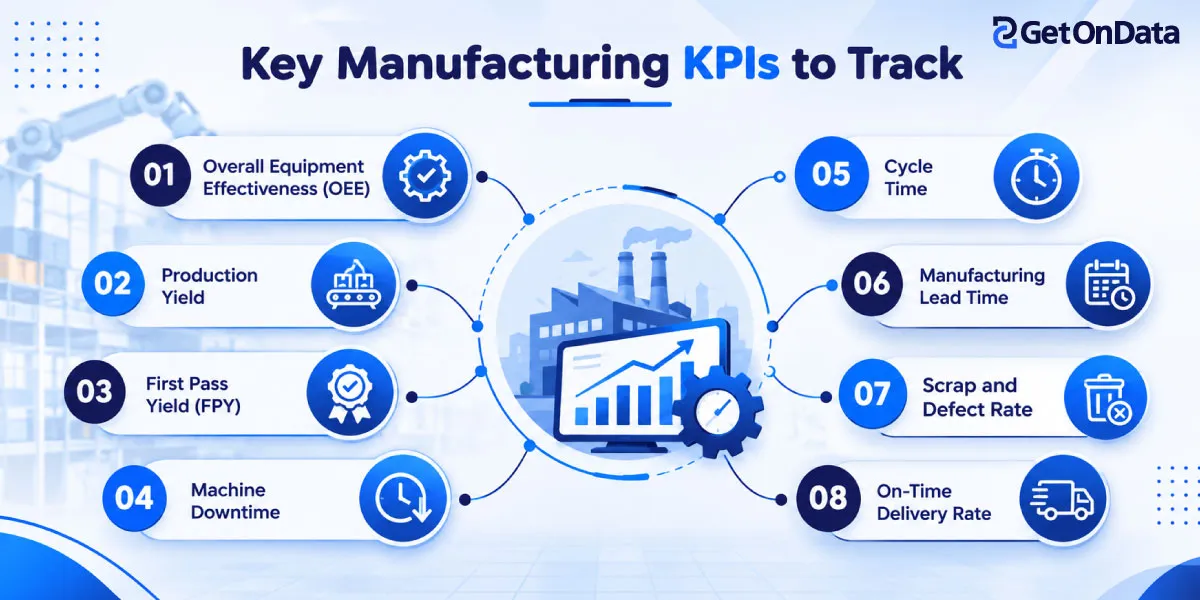
What Are the Key Manufacturing KPIs to Track?
For manufacturing teams to derive maximum value from manufacturing data solutions, they need to concentrate on clear and measurable numbers instead of everything.
☛ Overall Equipment Effectiveness (OEE)
OEE is considered to be the “Gold Standard” metric for factory productivity. It is defined by the combination of Availability, Performance and Quality, and is the actual percentage of productive manufacturing time. World class plants will strive to achieve an 85% or greater.
☛ Production Yield
Production yield is the percentage of finished goods with respect to the input of raw materials and indicates material efficiency.
☛ First Pass Yield (FPY)
FPY is a measurement of the percentage of units produced first time correctly without scrap or rework. Labor and material waste are directly reduced by a high FPY.
☛ Machine Downtime
This measures planned maintenance stops and equipment breakdowns. The downtime minutes per root cause indicates when assets must be upgraded.
☛ Cycle Time
Cycle time is the specific time taken to process one unit or one production step – either in seconds or minutes. A change in cycle time can indicate that the machine is in slow drift.
☛ Manufacturing Lead Time
Lead time is the time it takes from when a customer orders to when the product is delivered. The shorter the lead time, the quicker the cash flow, and the more you will please your buyers.
☛ Scrap and Defect Rate
This KPI is the proportion of defective products removed from the manufacturing process. Recognizing defect spikes early will avoid the production of unusable products by entire shifts.
☛ On-Time Delivery Rate
On-time delivery reflects the proportion of orders delivered by the deadline as a clear indicator of the factory’s reliability and customer’s confidence.
Real-World Use Cases of Manufacturing Data Analytics
By investing in data analytics services and solutions, companies can reap tangible benefits throughout the entire plant:
➭ Predictive Maintenance
Critical presses and conveyors are continuously monitored for heat, noise, and vibration to catch potential issues early. Using data analytics services in Chicago, manufacturers can identify unusual patterns, spot signs of equipment wear, and plan repairs during scheduled downtime. This helps keep operations running smoothly, avoid unexpected breakdowns, and reduce unplanned downtime by up to 30%.
➭ Production Process Optimisation
Manufacturing data analytics can identify the build up of parts by mapping cycle time at each workstation. Staffing levels or machine feeds can be altered when necessary to maintain smooth lines.
➭ Quality Control and Defect Detection
The high-speed cameras and machine learning system scan the belt for products, identifying minute misalignment or cracks which would be undetectable by manual process.
➭ Inventory and Supply Chain Optimisation
Predictive models take into account raw material orders against live production schedules, avoiding the need to over-stock warehouses and ensuring parts are on site on time.
➭ Energy Consumption Monitoring
Smart meters are used to monitor the consumption of electricity and gas per machine. Factories pinpoint equipment that consumes energy during periods of inactivity, and re-route heavy loads to lower rates during off-peak periods.
➭ Demand Forecasting and Production Planning
Historical order data, when combined with market trends, can assist commercial teams with planning ahead. Leaders coordinate factory capacity with customer demand, understand the product lines with high margins using the best tools for data analytics manufacturing sales.
What Technologies Are Used in Manufacturing Data Analytics?
Data analytics solutions for modern manufacturing are built on five fundamental technologies:
➢ Internet of Things (IoT)
Industrial IoT sensors mount on new and existing equipment and transmit all the data without the need for manual input, such as temperature, pressure, and count data.
➢ Artificial Intelligence and Machine Learning
AI and ML algorithms sift through millions of historical data records to identify subtle failure patterns, automate visual quality checks and suggest quicker production schedules.
➢ Cloud Computing
Cloud platforms offer secure storage that is scalable and allows multi-plant business to access live shop floor dashboards anywhere in the world.
➢ Big Data Analytics
High speed sensor streams are processed together with years of ERP and orders in seconds, by big data engines.
➢ Business Intelligence Tools
Today’s BI solutions, such as the top BI tools for data analytics, manufacturing sales and plant operations such as Power BI and Tableau, convert cleansed data into interactive charts and executive scorecards.
How to Implement Manufacturing Data Analytics in Your Business
Rolling out data analytics in manufacturing industry facilities works best when done step by step:
➥ Identify Business Goals
Begin with a couple of good goals, for example, reduce your scraps by 15% or improve OEE for your busiest packaging line.
➥ Collect Data from Manufacturing Systems
Show where your numbers reside in PLCs, ERP software, maintenance logs and quality spreadsheets. Teaming up with data analytics consulting Chicago specialists can accelerate machine integration.
➥ Clean and Organise Manufacturing Data
Use consistent reason codes, part numbers and downtimes for all departments, so that everyone is on a single, dependable source of truth.
➥ Select the Right Manufacturing Analytics Software
Select platforms that integrate seamlessly with current equipment, grow as your plant grows and boast user-friendliness, including the best analytics manufacturing sales and shop-floor reporting capabilities. Often trusted data analytics companies in Chicago evaluate and test software before it is rolled out before the rest of the world.
➥ Build Manufacturing KPI Dashboards
Create simple, high-contrast screens specific to each role, beginning with a 30 day pilot on one production line and roll-out plant-wide.
Also Read : Data Analytics Trends 2026 That Will Shape the Future of Business Intelligence
Key Benefits of Manufacturing Analytics Solutions
Data analytics’ value to the manufacturing floor is directly to the bottom line:
• Better production efficiency: shortened production cycles and reduced line delays.
• Improved equipment performance: Larger OEE and longer machine life.
• Lower operating costs: Minimize scrap, energy and overtime costs.
• Better product quality: Higher initial production yields and reduced returns from customers.
• Data-Driven Business Decisions: Planning with confidence, not blindly.
Understanding the benefits of data analytics in manufacturing makes it clear why forward-thinking plants treat data as their most valuable asset.
Ready to Improve Manufacturing Performance with Data Analytics?
One of the smarter investments a factory can make is to move from firefighting to proactive, data-driven production. From preventing unexpected production hiccups to improving first pass yield to assessing the most effective tools for data analytics manufacturing sales, the right data analytics services and solutions convert noise on the shop floor into profit growth.
In addition to trusted data analytics services in Chicago and top data analytics companies in Chicago, experienced data analytics consulting for manufacturing teams can select appropriate KPIs, link your machines, and start providing clear real-time dashboards. Adopt one high impact production line, monitor your key metrics every day and enjoy the perks of data analytics in manufacturing throughout your operation.
10 Best Manufacturing Analytics Companies in the USA to Consider in 2027
Manufacturing analytics companies in the USA are helping modern factories turn huge amounts of data into business value. US manufacturers face downtime, quality issues, rising material costs, and supply delays. NIST estimates that downtime costs U.S. discrete manufacturers $245 billion annually, highlighting the need for smarter, data-driven operations.
Manufacturing operations increasingly rely on AI, predictive analytics, and real-time monitoring to reduce costs, improve productivity, and maintain product quality. With the right manufacturing data solutions, companies can gain deeper insights into their operations and make faster, data-driven decisions. In order to modernize the operation of factories in 2027, it is crucial to choose the right provider.
What Is Manufacturing Analytics?
Manufacturing Analytics is the process of gathering and analysing data from machines, sensors, ERP systems and MES platforms to track production performance in real-time.
A leading manufacturing analytics company enables manufacturers to monitor machine health, forecast equipment failure, minimise downtime and optimise production. It links various systems together to deliver actionable information, enabling quicker decision making, cost reduction and quality improvement.
Key Benefits of Manufacturing Analytics for Businesses
Modern manufacturing data analytics services offer great value to businesses, which include:
⇒ Increased production efficiency: Helps maintain smooth production with optimum Overall Equipment Effectiveness (OEE).
⇒ Expertly tailored manufacturing analytics services: Optimised tools specifically for your manufacturing processes and lines.
⇒ Lower equipment downtime: Early failure alerts significantly cut down emergency repair expenses and maintain uninterrupted production.
⇒ Better quality control: Automated defect detection detects scrap trends early, which leads to improved consistency of products.
⇒ Optimized resource utilization: Saves energy and raw material waste and manages labour expenses.
⇒ Reliable demand forecasting: Manufacturing analytics services use historical operational trends to improve inventory planning and production scheduling
10 Best Manufacturing Analytics Companies in the USA to Consider in 2027
These are 10 manufacturing data analytics companies that can streamline complex factory data into useful insights, enhance efficiencies and make better business decisions.
1. GetOnData.io
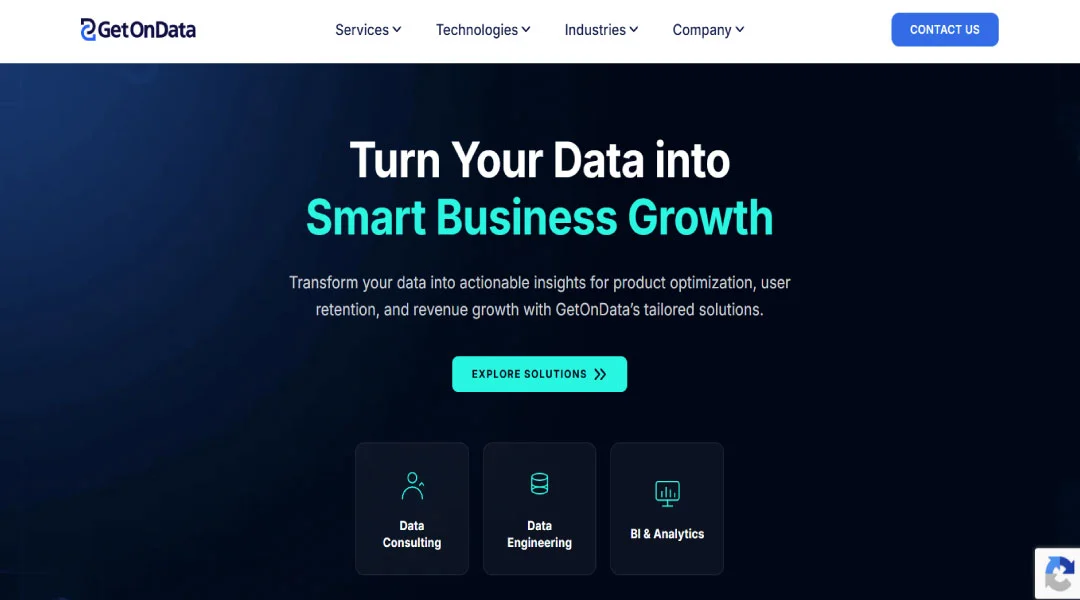
GetOnData IO offers data engineering, cloud migrations and custom analytics solutions to businesses. The company provides solutions to enable manufacturers to integrate machine information, production metrics, and business information into data-driven dashboards. A flexible manufacturing analytics provider, GetOnData IO can help manage data, minimize data silos and create scalable manufacturing analytics systems for complex factory workflows.
| SR. No. | Key Points | Services Provided |
|---|---|---|
| 1 | Founded Year: 2019 | Manufacturing Data Analytics |
| 2 | Number of Employees: 11-50 | Azure Databricks |
| 3 | Location: USA | Data Analytics |
| 4 | LinkedIn: View Profile | Power BI |
| 5 | Website: GetOnData | Microsoft Fabric |
2. OnPoint Insights
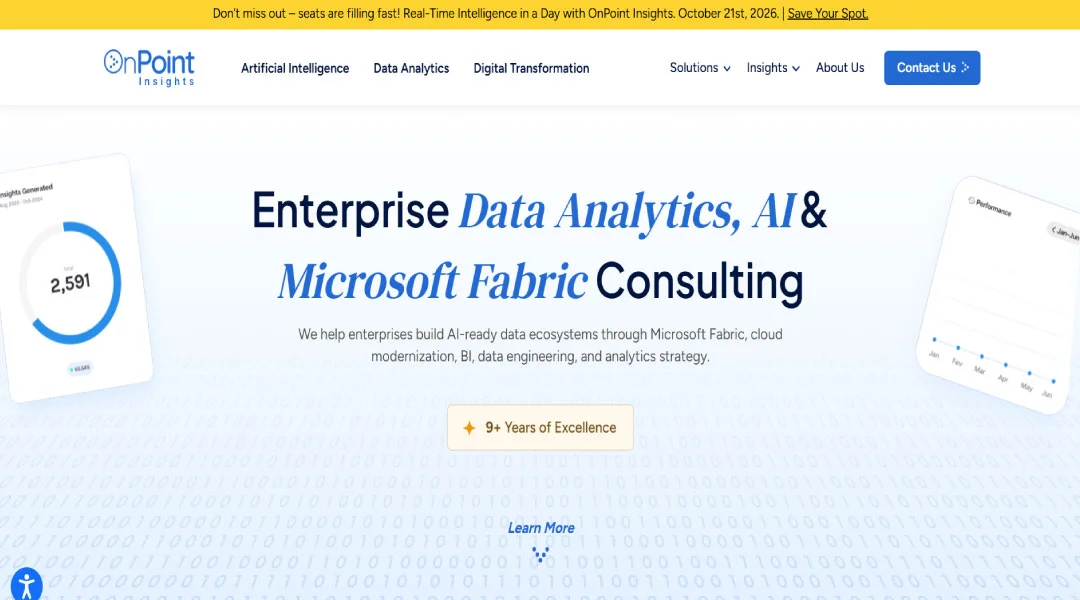
The OnPoint Insights solution leverages operational analytics and machine learning to enhance data strategies for businesses. Its solutions bridge the gap between ERP, MES, SCADA and IoT systems to give a single view of the factory performance. It provides its manufacturing data analytics services to aid manufacturers in determining the causes of downtime, tracking product quality, and optimizing production in various facilities.
| SR. No. | Key Points | Services Provided |
|---|---|---|
| 1 | Founded Year: 2015 | Manufacturing Data Analytics |
| 2 | Number of Employees: 11-50 | Data Analytics |
| 3 | Location: USA | Artificial Intelligence |
| 4 | LinkedIn: View Profile | Digital Transformation |
3. Dimensional Insight
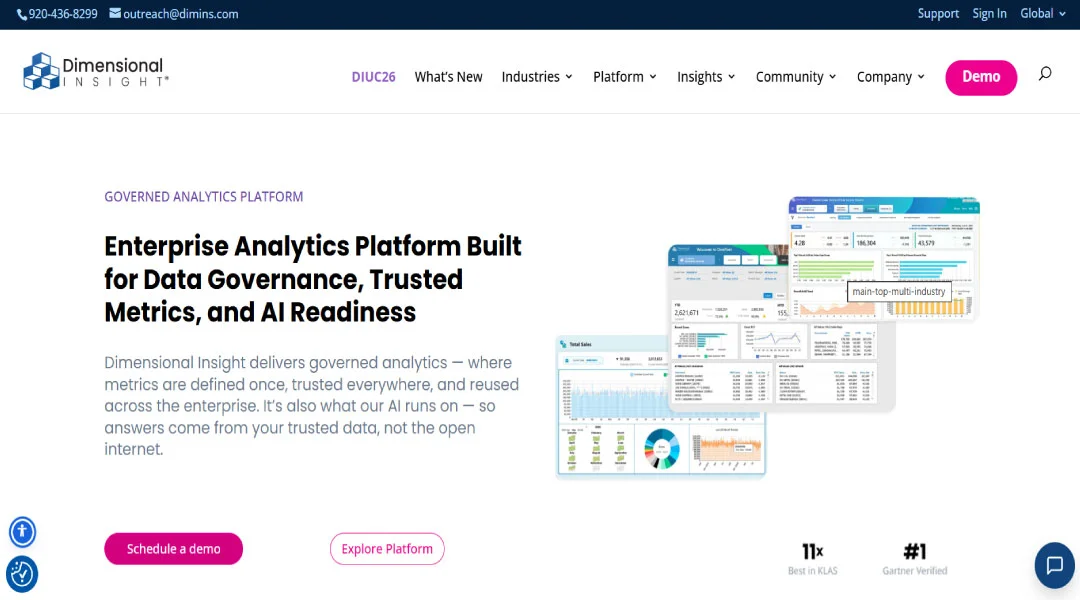
Business Intelligence and Data Management Solution by Dimensional Insight on Diver Platform. It provides tools for manufacturers to track production, stock levels and supply chain operations. The platform provides valuable insights into critical aspects of business operations, enabling businesses to identify performance gaps and optimize planning without the burden of complex reporting.
| SR. No. | Key Points | Services Provided |
|---|---|---|
| 1 | Founded Year: 1989 | Manufacturing Analytics |
| 2 | Number of Employees: 51-200 | Healthcare Analytics |
| 3 | Location: USA | Performance Management |
| 4 | LinkedIn: View Profile | Artificial Intelligence |
4. Sigmoid

Sigmoid is a data engineering and AI consulting firm assisting enterprises in the development of sophisticated analytics. It can help manufacturers modernise data infrastructure on cloud platforms like AWS, Azure, and Databricks. It’s also an expert in predictive maintenance, demand forecasting and process optimisation, all of which help businesses increase equipment efficiency and scale up data-driven production.
| SR. No. | Key Points | Services Provided |
|---|---|---|
| 1 | Founded Year: 2013 | Life sciences analytics |
| 2 | Number of Employees: 1,001-5,000 | AI-Led CPG Analytics |
| 3 | Location: USA | Insurance Reimagined |
| 4 | LinkedIn: View Profile | Banking and Financial Services |
5. Analytics8
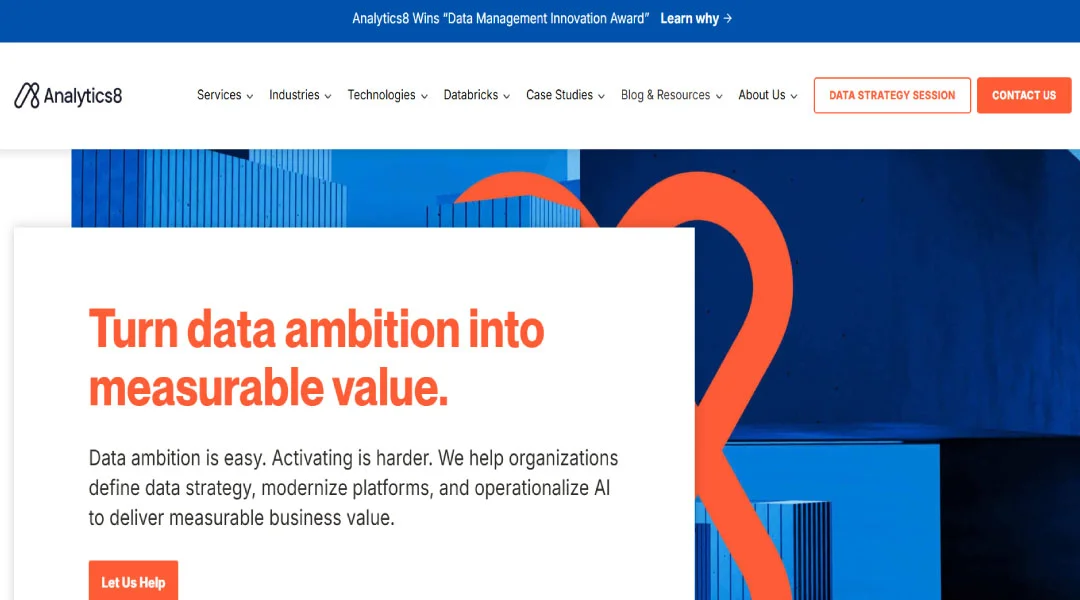
Analytics8 assists businesses in creating successful data and analytics strategies. The company converts isolated factory information into trustworthy information that helps them with their daily operation and long-term planning. Its solutions can help manufacturers to measure Overall Equipment Effectiveness (OEE), monitor part quality (scrap rates), control costs of production, and enhance accuracy of reports and improve internal data capabilities.
Also Read: Top 12 Predictive Analytics Consulting Companies in USA
| SR. No. | Key Points | Services Provided |
|---|---|---|
| 1 | Founded Year: 2003 | Manufacturing Analytics |
| 2 | Number of Employees: 51-200 | Retail Analytics |
| 3 | Location: USA | Healthcare Data Analytics |
| 4 | LinkedIn: View Profile | Financial Services Analytics |
6. Onebridge
AI Consulting, Analytics and Data Management solutions for complex industries are provided by Onebridge. It offers services like data governance, platform modernisation, and developing operational dashboards. These capabilities can help manufacturers enhance the quality of their data, bolster information security, and gain visibility into production performance, enabling informed operational decisions and better planning.
| SR. No. | Key Points | Services Provided |
|---|---|---|
| 1 | Founded Year: 2005 | Manufacturing Analytics |
| 2 | Number of Employees: 201-500 | Financial Analytics |
| 3 | Location: USA | Marketing Analytics |
| 4 | LinkedIn: View Profile | Retail Analytics |
7. X-Byte Analytics
X-Byte Analytics provides data analytics, cloud automation and business intelligence services. The company supports manufacturers in building automated data pipelines and dashboards to track inventory, production rates and supply chain efficiency. They minimize manual reporting, and assist larger manufacturing companies in recognizing issues in operations, monitor key metrics, and make better decisions.
| SR. No. | Key Points | Services Provided |
|---|---|---|
| 1 | Founded Year: 2012 | Manufacturing Analytics |
| 2 | Number of Employees: 201-500 | Education Data Analytics |
| 3 | Location: USA | Insurance Analytics |
| 4 | LinkedIn: View Profile | Healthcare Data Analytics |
8. Alteryx
Alteryx offers an automated analytics platform designed to connect, prepare and analyse data from multiple sources. It can be used by manufacturers to integrate information from ERP, MES and Internet of Things systems and to automate repetitive reporting. It’s designed for quality analysis, supply chain planning, cost forecasting and more, enabling teams to make informed and timely decisions.
| SR. No. | Key Points | Services Provided |
|---|---|---|
| 1 | Founded Year: 1997 | Manufacturing Data Analytics |
| 2 | Number of Employees: 1,001-5,000 | Retail Analytics |
| 3 | Location: USA | Financial Data Analytics |
| 4 | LinkedIn: View Profile | Education Data Analytics |
9. Synchrono
Synchrono is a specialist in designing demand-driven manufacturing software and production scheduling solutions. It provides a platform that allows manufacturers to link production tracking with scheduling and inventory. Synchrono enhances visibility of machine status, order progress, and material availability, enabling plant managers to respond to demands, minimise manufacturing delays, and ensure smoother manufacturing processes.
| SR. No. | Key Points | Services Provided |
|---|---|---|
| 1 | Founded Year: 2000 | Manufacturing Analytics |
| 2 | Number of Employees: 51-200 | Escalation Management |
| 3 | Location: USA | Inventory Replenishment |
| 4 | LinkedIn: View Profile | Automated Production Scheduling |
10. Blue Margin
Blue Margin supports mid-sized businesses transforming their scattered data into automated reporting tools, especially via Microsoft Power BI. It is a manufacturing analytics firm that assists manufacturers in creating dashboards to track machine utilisation, production schedules, OEE, and scrap rates. Operational data on these dashboards is easier to understand, aiding management to recognise inefficiencies, monitor progress and make timely improvements.
| SR. No. | Key Points | Services Provided |
|---|---|---|
| 1 | Founded Year: 2011 | Manufacturing Analytics |
| 2 | Number of Employees: 11-50 | Healthcare Analytics |
| 3 | Location: USA | SaaS Analytics |
| 4 | LinkedIn: View Profile | Private Equity Analytics |
How to Choose the Right Manufacturing Analytics Company for Your Business
When selecting the right partner from the best manufacturing analytics companies, consider their industry experience, technical expertise, integration capabilities, cost, and support.
➥ Evaluate Industry Experience and Manufacturing Expertise
Select a company that has experience in manufacturing operations and industrial data. Check its case studies, project outcomes and skills for manufacturing data consulting. Make sure it provides manufacturing data analytics services relevant to your industry and manufacturing processes.
➥ Assess Analytics and AI Capabilities
Search for a provider that provides real-time monitoring, predictive maintenance and AI-powered analytics. The advanced machine learning features should also be able to detect equipment failures, production bottlenecks and quality problems before they impact operations.
➥ Check Integration Capabilities
Make sure the analytics solution connects to your ERP, MES, SCADA and IoT systems. It should also be scalable and accommodate the growing amount of data as your manufacturing grows.
➥ Consider Implementation Costs and Expected ROI
Compare software license, implementation, training and maintenance expenses. Look for one that will give you a flexible pricing structure and a phased implementation. Assess the possible benefits by minimizing downtime, material waste and production inefficiency.
➥ Review Security, Scalability, and Customer Support
Ensure the provider adheres to relevant security protocols, like ISO 27001 and SOC 2, and employs robust cybersecurity measures. Make sure the solution will be able to scale with the future and provide you with solid technical support, frequent updates and long-term customer support.
Key Manufacturing Analytics Trends to Watch in 2027
As technology advances, some of the best manufacturing data solutions are adding more and more exciting features:
⇒ AI-Powered Predictive Maintenance: Machine learning algorithms now predict equipment failures weeks in advance, freeing up time for maintenance teams to plan for needed repairs during downtime.
⇒ Real-Time Manufacturing Intelligence: Edge computing analyzes the sensor data on the factory floor and provides real-time alerts to machine operators, with no lag.
⇒ Digital Twins and Process Simulation: Virtual models of full production lines enable managers to simulate the changes in line speed and floor layouts without risking anything in the physical plant.
⇒ Generative AI and Intelligent Automation: With natural language interfaces, shift supervisors can ask simple text questions, such as “Why did Line 2 slow down?” and receive immediate operational answers.
⇒ Energy Efficiency and Sustainability Analytics: Automated dashboards track energy consumption and emissions per unit, ensuring plants stay environmentally compliant and save on utility costs.
Also Read: Data Analytics Trends 2026 That Will Shape the Future of Business Intelligence
Common Challenges in Implementing Manufacturing Analytics
There are advantages to be gained, but implementing a holistic manufacturing analytics services can present challenges:
➥ Connecting Legacy Systems: Older machinery often lacks modern sensors or software compatibility, requiring smart gateway hardware or custom data adapters.
➥ Data Quality and Silos: When systems are not connected, there are chances of duplicate, incomplete and inaccurate records across the departments.
➥ Industrial Cybersecurity Risks: When connecting floor equipment to cloud analytics platforms, it is important to have robust OT network isolation and end-to-end encryption.
➥ Workforce Adoption Gaps: Shop floor operators might not want to install new software because it disrupts daily operations or doesn’t have a simple visual interface.
➥ Scaling Beyond Pilot Projects: Migrating from a single test line to a factory-wide or global roll-out requires leadership and good data governance.

Ready to Transform Your Manufacturing Operations With Data Analytics?
Modern smart manufacturing is characterized by quickness, clarity, and constant improvements. Manual reporting is outdated, and can leave your shop floor exposed to unforeseen downtime, increasing costs, and missed production goals.
By working with the best manufacturing data consulting, you will have a solid plan to connect machines, clear your operational data and put in place cutting-edge solutions from the top data analytics companies for manufacturing. With the proper analytics investments in 2027, you can transform floor data into long-term efficiency and sustainable competitive advantage.