Data analytics is helping businesses make smarter decisions. In the modern world, organisations are inundated with incoming information per second which makes it difficult to get actionable answers easily. The business intelligence landscape is changing with new technologies. By aligning with expert data analytics services, modern businesses can find a clear path through this intricate landscape.
In 2026, the use of data analytics services and solutions will be at an all-time high. In 2026, data analytics and real-time insights will drive analytics. In today’s business world, modern analytics is helping businesses improve growth and efficiency. The global data analytics market is projected to reach USD 104.39 billion in 2026. Incorporating trends in data analytics can help businesses optimise their processes and maintain a competitive edge.
What Is Data Analytics and Why Is It Important for Modern Businesses?
Data Analytics is defined as the process of collecting, processing and analyzing business data to gather relevant information. It assists organisations to recognise trends, enhance operations, cut costs and make informed choices.
Data from sales platforms, websites, customer feedback, and other sources can be analysed to understand performance and make informed decisions for planning. Collaborating with one of the best data analytics agencies can convert raw data into actionable insights that can drive business growth.
Why Advanced Data Analytics Matters in 2026
Businesses are dealing with an increasing amount of complex data. It’s time to move beyond static reporting tools and basic spreadsheets to meet the needs of a dynamic market. The use of advanced analytics can enhance the decision-making process and drive better business performance.
Companies can use specific data analysis services to process millions of data points in a matter of seconds. High-volume data streams can be transformed into actionable intelligence with modern data analytical services, without burdening internal teams. It enables quicker insights, improved strategies, and data-driven growth. By keeping up to date with the future trends in data analytics your enterprise will be able to adjust fast to the changing requirements in the industry.
Also Read: How Much Does Data Analytics Cost in the USA in 2026?
Technologies Driving the Future of Business Intelligence in 2026
◈ Artificial Intelligence and Machine Learning
The backbone of contemporary business intelligence is artificial intelligence (AI) and machine learning (ML). These systems automatically process large amounts of data to identify anomalies, make probability models, and minimize human error.
◈ Generative AI for Data Insights
Non-technical team members can ask direct and natural language questions using generative AI. Users need not write complicated SQL queries, they just have to type a question to get back a plain text answer, a summary chart or a narrative report in seconds.
◈ Cloud-Based Analytics Platforms
Cloud platforms provide scalable compute power and storage without the need to invest in a large hardware infrastructure. They can make sure that remote and distributed teams have access to secure, one source of truth dashboards, anywhere in the world.
◈ Real-Time Data Processing Technologies
Events are sent to streaming data engines the same moment they occur. With this ongoing flow, companies may instantly update online costs, detect fraudulent online transactions, and track real-time supply chain performance without any lag time.
◈ Automated Data Visualization Tools
At a click, the data gets converted to an easy-to-read chart, heatmap and interactive graph. These are used to provide a dynamic alternative to static spreadsheets and focus on the key performance indicators (KPIs) for quicker review of operations.
◈ Data Security and Governance Technologies
As this data expands, ensuring that customers’ sensitive information is protected becomes increasingly important. Advanced governance tools automatically enforce regulation compliance, regulate access within the organization, and keep datasets clean and accurate.
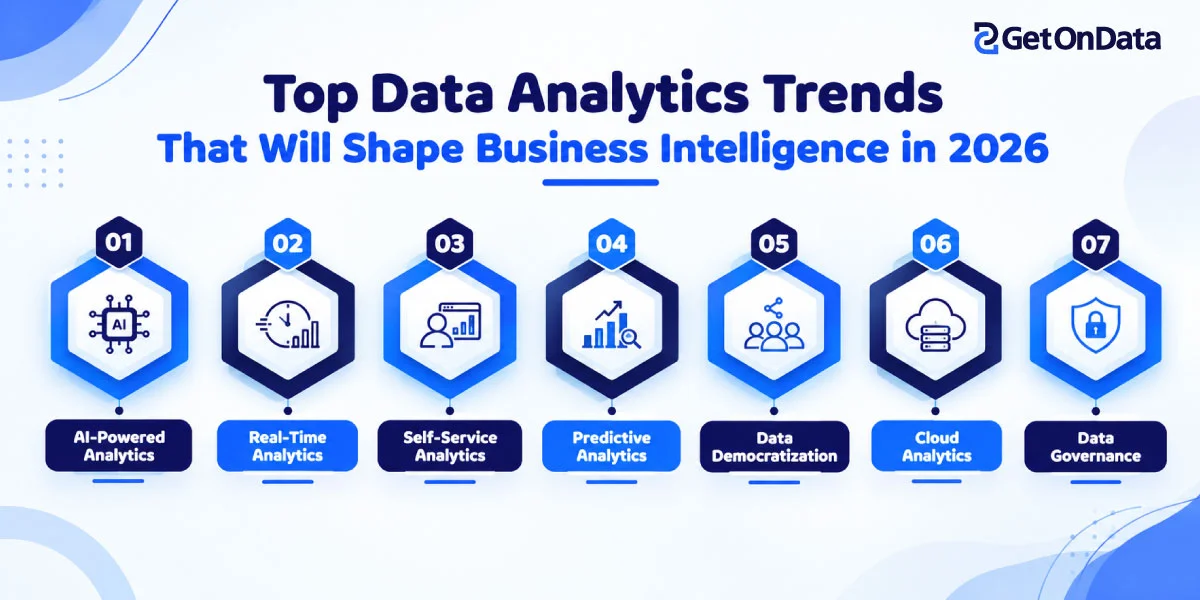
Top Data Analytics Trends That Will Shape Business Intelligence in 2026
1. AI-Powered Analytics
AI is revolutionizing analytics with the ability to automate data analysis and provide quicker insights. AI-powered analytics will help businesses make more accurate forecasts and suggestions. Such intelligent systems handle the tedious tasks of data preparation and enable human analysts to concentrate on decision-making. Staying on top of these top data analytics trends helps organizations remain agile and resilient.
2. Real-Time Analytics
Real-time analytics are becoming a reality and organizations are taking advantage of it to get up to date information in real time. For companies aiming for localized expansion, Chicago web analytics consulting experts are an ideal choice to enhance their digital customer interactions. Brands can make quick and effective adjustments to their online conversions with local help from web analytics consulting Chicago professionals. It enables enterprises to react promptly to market shifts and client needs. Emphasizing real-time tracking stands out as one of the most vital big data analytics trends today.
3. Self-Service Analytics
Self-service analytics enables non-technical teams to easily access and analyse data. It makes data more accessible and aids quicker decision-making. With drag-and-drop dashboards, marketing, sales, and HR teams can no longer wait weeks for the IT team to build custom reports.
4. Predictive Analytics
Predictive analytics is used to analyse past data to predict future trends in business. It can aid in planning, risk management, and strategic decisions. By analyzing past sales and economic trends, businesses can anticipate intense demand, manage inventory and avoid waste.
5. Data Democratization
Data is being shared between teams and departments within a business. Data-driven culture promotes better collaboration and decision-making. When data silos are eliminated, everyone is on the same facts, which means everyone is aligned for cross-departmental goals.
6. Cloud Analytics
Businesses are dealing with increasing data needs and cloud-based analytics platforms are assisting in managing these data needs. They provide flexibility, scalability, and easier access to insights. Cloud systems grow with the data and can easily scale up processing power without costly upgrades to local servers.
7. Data Governance
Organizations are prioritizing the proper, responsible and secure handling of data. Good governance helps to ensure the quality of data and adherence to standards. Defining and adhering to data protocols creates clarity and confidence with customers and avoids expensive legal or security issues. The priorities are directly in line with the current data analytics trends on a global scale.
Also Read: Benefits of Data Analytics for Building a Data-Driven Organization
Key Benefits of Adopting Modern Data Analytics Trends
➔ Improve Business Decision-Making
Structured data analytics and insights remove the need to rely on intuition. Using clear data analytics and insights enables leadership teams to be confident in their decisions and enter new markets and launch products successfully.
➔ Increase Operational Efficiency
Manual processing is reduced with automation. Companies can save hundreds of hours of manual reporting time per year by automating repetitive workflows, and free up time for employees to focus on their core innovation.
➔ Enhance Customer Experiences
Inspecting behaviours provides companies with the ability to develop tailored journeys. Personalized product suggestions and customer service can really enhance brand loyalty and retention rates.
➔ Support Business Innovation
Uncovering new market opportunities is one of the benefits of clear data visibility. By identifying customer pain points, businesses can create better products that address the actual concerns of the customer before the competition.
Challenges Businesses May Face When Implementing Advanced Analytics
➢ Managing Data Quality Issues
Inconsistent, duplicate or out-of-date data results in poor strategic decisions. Developing a partnership with the local experts, who have expertise with data analysis services in Chicago, can be of great help to resolve issues in the pipeline. Advanced teams provide data analytics services in Chicago that can easily clean complex databases and ensure executive decisions are backed by absolute accuracy.
➢ Lack of Skilled Analytics Professionals
It’s challenging to find experts in both data science and business strategy. To fill this internal talent void lots of companies have been signing up with the experienced data analytics companies Chicago to help them with complex builds. Chicago data analytics companies offer immediate access to qualified data architects, avoiding lengthy recruitment processes.
➢ Data Security and Privacy Concerns
Open data access and privacy regulations need constant vigilance. Businesses need to establish encryption, multi factor authentication, and tight user privileges.
➢ Integration With Existing Systems
When it comes to integrating modern cloud software with existing on-premise infrastructure, there may be unexpected technical friction. Adopting it will require careful management of the API and a phased approach to migration.
➢ High Implementation Costs
The setup of advanced tools and training personnel requires an initial monetary investment. But, the benefits of long-term operational efficiency and revenues are greater than the initial costs.
How Businesses Can Prepare for the Future of Business Intelligence?
Businesses can get ready by establishing analytics objectives, implementing scalable cloud and AI solutions, enhancing data quality and building internal analytics abilities.
Supporting long-term readiness is also by encouraging data-driven decisions, with robust privacy practices. Being current with the trends in data analytics, and utilizing data analytics services and solutions with focused data analytical services, can help to boost the efficiency and business growth.
Ready to Embrace the Future of Business Intelligence With Data Analytics?
New analytics trends are transforming the world of business intelligence with the help of AI, automation and real-time information. Businesses can partner with specialized data analytics agencies to develop scalable solutions that align with their business objectives.
Coordinating with professional Chicago Web analytics consulting firms and professionals in data analysis in Chicago can enhance efficiency and help make smarter choices. Reliable data analytics services Chicago and data analytics services and solutions are also beneficial for businesses to convert data into actionable data analytics and insights.
By staying attuned to the trends in big data analytics and data analytics future trends, businesses can ensure they remain agile, competitive, and ready for future growth.

 Manufacturing Data Analytics