Organizations are shifting from disconnected BI products to single-platform BI ecosystems to streamline data management, cut costs, and increase speed of insights. A unified fabric service data engineering, data science, real-time analytics, BI and AI into a single platform.
Initiators of this transformation include Microsoft Fabric’s end-to-end capabilities. With more than 19,000 organisations and 74% of Fortune 500 companies already leveraging Fabric, its role in modern analytics is becoming increasingly significant.
By learning about the Microsoft Fabric Roadmap, businesses can better plan for future innovations, modernise their infrastructure, and create AI-ready architectures. Keeping track of each Microsoft Fabric update and Microsoft Fabric news release can also help organisations stay competitive as analytics and AI capabilities continue to evolve.
What Is Microsoft Fabric and Why Does Its Roadmap Matter?
➥ Overview of Microsoft Fabric
Microsoft Fabric is an analytics platform that combines data engineering, data integration, data science, real-time intelligence, Power BI, and data warehousing all within one SaaS platform. Unlike working with a set of disconnected tools, businesses can work across their data and analytics workloads with a single ecosystem. OneLake’s core essence is the centralized data foundation that eliminates data duplication, streamlines data management, and delivers consistent data throughout the organization to teams.
Why Businesses Need to Follow the Microsoft Fabric Roadmap
Keeping up with fabric roadmap Microsoft releases helps organizations prepare for upcoming analytics, AI, and data management requirements. Knowing what features are planned helps businesses make more informed infrastructure investments, steer clear of extraneous third-party tools, rationalize their tech stack, and more effectively plan for AI adoption. It also assists teams to adhere to a structured Microsoft fabric certification roadmap, ensuring that workers can acquire the appropriate skills in advance of new capabilities. To help organizations implement roadmap updates more effectively and without hassle, working with experienced fabric experts can be beneficial.
Also Read: End-to-End Microsoft Fabric Consulting Services for Scalable Data Management
Microsoft Fabric Roadmap 2027: Key Trends Shaping the Future of Analytics
1. AI-Powered Analytics and Intelligent Data Experiences
AI for generation is a key component of the Microsoft fabric workflow, assisting enterprises in automating common analytics and data tasks. Future capabilities are projected to further enhance Copilot’s capabilities in creating datasets, generating DAX and SQL, report writing, and natural-language data exploration. This will enable business users to have a conversation with enterprise data and get quicker, contextually relevant answers without solely relying on technical users.
2. Advanced Data Engineering and Automated Pipelines
Automation for data pipelines will keep on growing as the volume of data becomes more intricate. Teams can benefit from intelligent job optimization, dynamic workload management, and enhanced Git integration to optimize their development and deployment processes. These enhancements can help decrease manual workload, maximize compute resources, speed up data preparation and deliver richer data for analytics and AI workloads.
3. Real-Time Analytics and Event-Driven Decision Making
Operational Analytics is moving from batch processing to real-time decisions. Improved Real-Time Intelligence can facilitate the processing of large numbers of streaming data points from IoT devices, apps, operational systems and event logs. These can be used by businesses to shed light on production problems, track customer activity, change prices, spot fraud, and quickly adapt to changing circumstances.
4. Stronger Integration with Microsoft Cloud Ecosystem
Microsoft Fabric is once again very tightly bound to Azure services, Power Platform, Dynamics 365 and Microsoft 365. Deeper integration can enable organizations to integrate analytics into their business applications more commonly, as described in the Microsoft fabric implementation roadmap. With tools like Teams and Excel, departments have relevant insights within reach, without having to move between apps, which helps teams collaborate with consistent data.
5. Enhanced Data Governance and Security Capabilities
With the growing adoption of AI and cloud analytics in organizations, robust governance and security measures are critical. Advancements planned in the roadmap will further enhance access control, data lineage, monitoring, and compliance capabilities for the Fabric environment. The enhancements will enable organizations to implement security measures that safeguard sensitive data, gain insights into how data is being used and can create a reliable framework for traditional analytics and AI use.
How Businesses Can Prepare for Microsoft Fabric Adoption in 2027
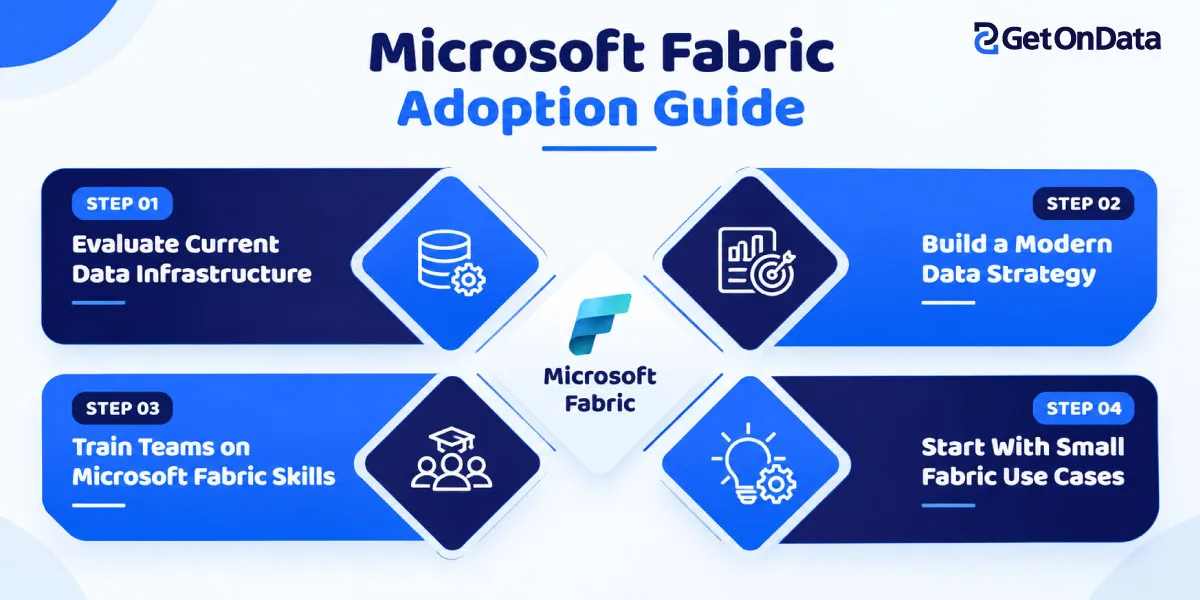
❏ Evaluate Current Data Infrastructure
The first step that businesses should take is to look at their current BI tools, data warehouses, ETL processes, and integration issues. A certified fabric consultant can determine dependences, cost estimates for migration, and develop a viable transition plan for a common fabric service.
❏ Build a Modern Data Strategy
Organizations will need to build a scalable data strategy around OneLake, with clear objectives and a data quality, security, and governance strategy. This establishes a solid groundwork for future analytics and AI initiatives.
❏ Train Teams on Microsoft Fabric Skills
Structured learning, together with a Microsoft fabric certification path, should enable data engineers, analysts, and DBAs to develop relevant Fabric skills. Keeping teams up to date on the latest Microsoft fabric news can also keep them informed about new features and practices.
❏ Start With Small Fabric Use Cases
Businesses can start with low-risk projects to gain experience with a Microsoft fabric workflow, determine ROI and collect user input before rolling it out across the enterprise. More advanced Microsoft fabric specialists can provide assistance with more extensive deployments and avoiding typical implementation issues.
Industries That Can Benefit From Microsoft Fabric Roadmap Advancements
➜ Manufacturing
Fabric Advancements can be harnessed by manufacturers to integrate production, supply chain and operational information. This allows real-time monitoring, predictive maintenance, demand forecasting, and improved production planning.
➜ Healthcare
Healthcare organizations can combine clinical, operational and administrative data to enable quick analysis. Patient insights, resource planning, reporting, and decision-making using AI can be supported by fabric and yet have good governance.
➜ Retail and E-commerce
Retailers can use sales, inventory, customer, and marketing information to help them better understand their customers’ buying habits and enhance their operations. Fabric can be used to enable demand forecasting, custom experiences, stock management, and real-time business analysis.
➜ Financial Services
For banks and financial institutions, Fabric can help bring transaction, customer and risk data together. This can help enhance fraud detection, risk analysis, regulatory reporting and financial forecasting by leveraging centralized analytics.
Also Read: Top Microsoft Fabric Partner in USA for End-to-End Data Integration
Role of Microsoft Fabric Consulting Partners in Future Analytics Transformation
Switching to a multi-workload analytics platform can be daunting, particularly for companies with legacy systems and extensive data collections. Businesses can consult with Microsoft Fabric partners to evaluate their current assets, plan migration needs, and create a migration plan that aligns with the platform’s roadmap and Microsoft fabric updates.
They also enable data migration, OneLake architecture, security and governance, and workload modernization, with minimal disruption to existing operations. Consulting partners deliver training and long-term support to teams to enable them to use Fabric effectively. With the help of expert fabric professionals, deployment issues can be minimised and the value of an organisation’s Fabric investment maximised.
Build a Future-Ready Analytics Ecosystem with Microsoft Fabric Experts
Microsoft Fabric is revolutionizing data storage, processing, and analysis for enterprises. This integration of various analytics workloads into a single platform empowers organizations to reduce operational costs, fast-track AI adoption, and generate meaningful business value with data more quickly than ever.
It is imperative that businesses check all Microsoft fabric updates and work with qualified Microsoft fabric specialists and a knowledgeable expert on fabric. Assessing the state of your data maturity today puts your enterprise on track to realize the power of the next generation of analytics.

 Manufacturing Data Analytics